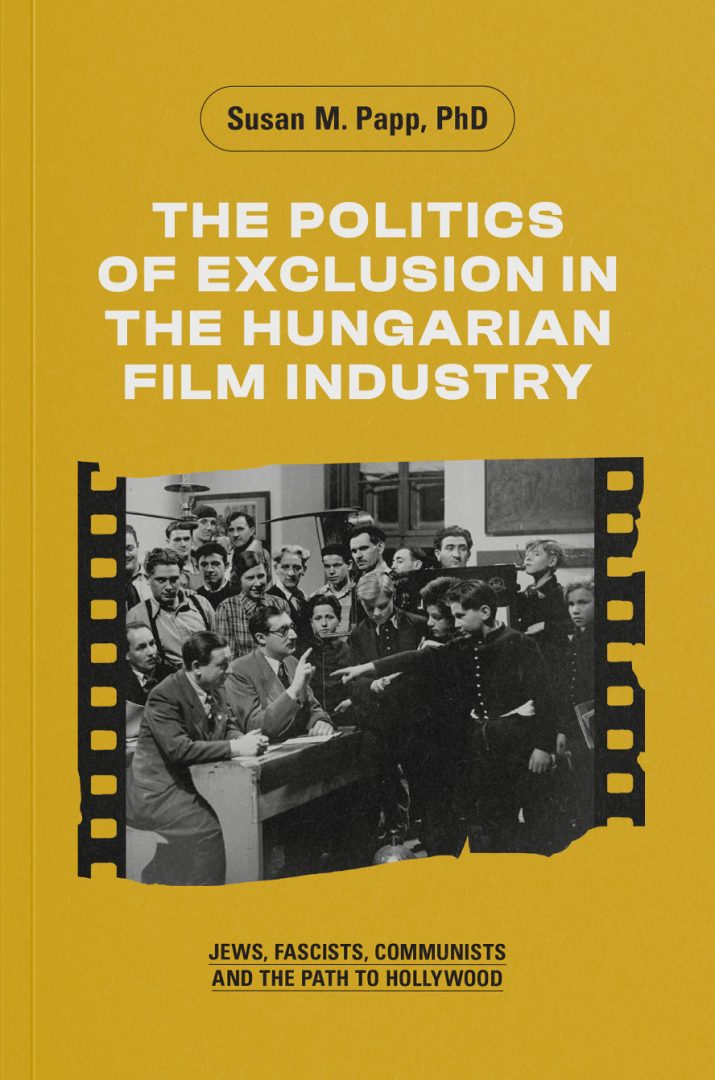
The Politics of Exclusion in the Hungarian Film Industry
This book is about an indefatigable and persistent vocation, namely film professionals who maintained the veneer of normalcy as they continued pursuing creative exploits even when everything around them was crumbling. This book explores how successive authoritarian regimes in Hungary politicized and shaped the film industry to do their bidding. It also examines how filmmakers, actors and actresses reacted to and resisted those political pressures. This is the chronicle of the politics of representation and discrimination, of cultural capital as it plays out in creative industries, of the drastic impact of regime change and judicial processes. It is the story of how individuals in the Hungarian film industry were used and abused by at least three different regimes in a single lifetime.
This book examines the history of one industry—filmmaking—in one country, namely Hungary, over the timespan of three distinct governments, as a microcosm of how individual creatives countered autocratic regimes. It is dedicated to the memory of this one industry through the lens of those filmmakers who resisted autocratic regimes and continued to work, the ones who reinvented themselves, those who protested with their feet and left, depriving the country of their talents. This is the poignant story of how despite wars, revolutions, and seemingly never-ending political upheaval, despite discriminatory laws and regulations, despite autocratic regimes and appalling bureaucracy, the film industry in Hungary has consistently been able to re-emerge and reinvent itself, by continuing to work, while remaining in their homeland, or in exile, producing stories that engage and entertain.
What people are saying about this book
Susan Papp’s manuscript is an essential contribution to an understanding of the politics of exclusion and retribution in 20 th century Europe. The work deals with Hungary, but is putting her argument into a broader, European context. This way it is not only a book for specialists of 20 th century authoritarian regimes, but can also be well used by researchers who are working on comparative projects focusing on various forms of discrimination practiced by modern totalitarian regimes.
Professor Attila Pók, Deputy Director of the Institute of History at the Hungarian Academy of Sciences
The history of Hungarian cinema is one of the most exciting topics in Central European cultural history: in her thoroughly researched and source-based work, Susan Papp shows how the various regimes of the 20th century used film for their own purposes—and how they dealt with those who stood on the opposite side, or how they forgave them. It’s an intellectual rollercoaster ride that inevitably captivates the reader.
Professor Balázs Ablonczy, Institute of Historical Studies, Eötvos Loránd University
How do people cope when they lose their careers, their livelihoods, their creative outlets, not because they have failed at their jobs, or transgressed laws but because legislation bars them because of their religion? What do they do when the next government seeks to annihilate them? How did survivors deal with the successive government, which tarred them as fascist collaborators, subject to punishment? Susan Papp has written a thoroughly researched history of the Hungarian film industry using memoirs and archival sources to tell the stories of scores of actors, screen writers and directors before banishment from their jobs, and how they coped in the "after" through three successive Hungarian governments. Be prepared to be astonished by the sheer grit and enormous contribution of those who would not let go of their craft whether they pursued it in Hungary or abroad. Be dismayed by governments which sought to bend the world of film, and through it, popular culture, to their will. This book is not just for film buffs but also for readers who love movies, but are unaware of the toll geopolitical circumstances took on Hungarians who wanted to tell stories on the screen.
Professor Emőke Szathmáry, President Emeritus, University of Winnipeg